
Snow Plowing in Ashland, MA: A Winter Property Guide for Homeowners
· By Vantuir F. Procopio
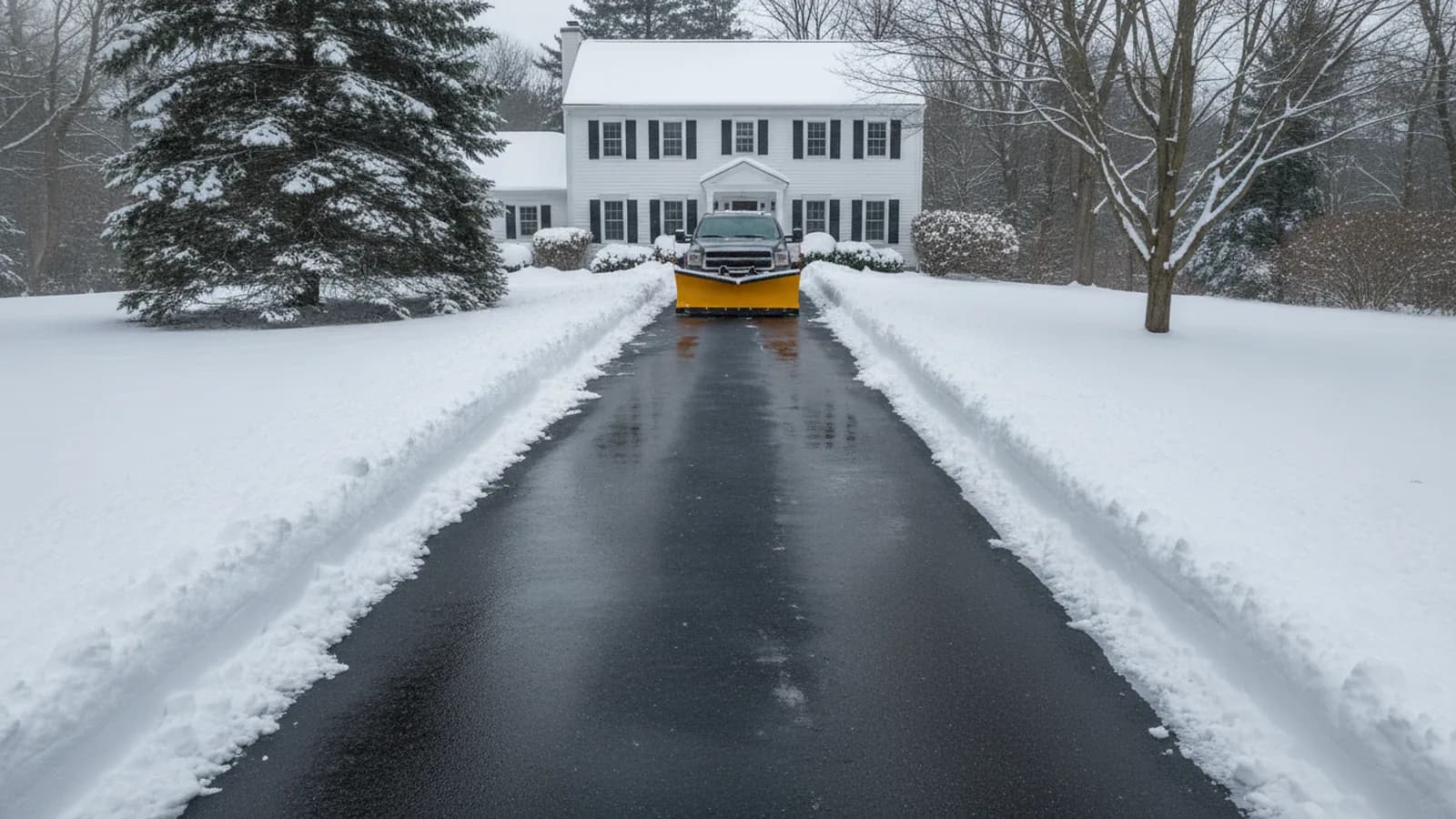
Snow plowing in Ashland, MA is a shared job. The town clears the roads, and homeowners handle driveways, the end of the driveway the plow fills back in, sidewalks along their property and the hydrant out front. Knowing who is responsible for what, and getting your yard ready in the fall, saves a lot of shoveling and a few headaches with tickets and broken mailboxes.
This guide pulls together the rules Ashland's Department of Public Works has published for winter, plus practical steps to protect your lawn, beds and shrubs from plows and salt. Rules can be updated from one season to the next, so treat this as a starting point and check the town's DPW page for the current version.
Ashland's winter parking ban: November 1 to April 1
Ashland runs a winter parking ban from November 1 until April 1. During that period on-street parking is not allowed overnight, and it is also not allowed while snow operations are under way. Cars left in the road can be ticketed, and if they get in the way of plowing they can be towed at the owner's expense.
For households with more cars than driveway, this is the rule that matters most. Plan where everyone parks before November, especially if you have college kids home for the holidays or guests staying over. A wider or extended driveway edge that is plowed properly is often the difference between fitting three cars or two after a big storm.
The driveway end: why the plow fills it back in
Every Ashland homeowner learns this one fast. Town plows cannot lift as they pass driveways, so the windrow of snow from the road ends up across the bottom of your driveway, sometimes several times in one storm. The town is clear that clearing driveway openings is the property owner's responsibility.
You have two choices: clear it as you go, or wait until the town's plows have finished their final pass. Waiting usually means less total work, but the pile at the end gets heavy and can freeze solid overnight. If you need to get out early for work, clear a path, and expect to do the end again later.
One more rule: Ashland's bylaws prohibit pushing snow into the street. That applies to you, and it applies to any private plow contractor you hire. Snow from your driveway has to stay on your property, which is why planning where the piles go matters.
Sidewalks and hydrants: the 24-hour rule
The DPW plows many of Ashland's sidewalks on its own priority list, but the town still asks property owners and tenants to clear snow and ice from the sidewalk next to their property within 24 hours after the snowfall ends. The reason is simple: pedestrians, mail carriers and kids walking to school end up in the road when sidewalks stay buried.
The town also asks residents to clear snow around any fire hydrant on or near their property so firefighters can reach it quickly. A three-foot circle around the hydrant and a path to the street is a good rule of thumb. If you have a corner lot or a long frontage, this is easy to forget after a long storm, so put it on your list.
Mailboxes, the right of way and your lawn edge
Ashland's DPW policy is that the town's right of way extends roughly five feet or more from the edge of the pavement. Anything placed in that strip (mailboxes, fences, small trees, sprinkler heads) is there at the owner's risk, and the town is not responsible for plow damage to it.
There is one exception for mailboxes. If a plow directly strikes your mailbox, the town will reimburse up to $50 per incident. Damage caused by the weight of the snow thrown off the plow is not covered. Claims have to be filed within 48 hours on the town's form, and only one claim per household is accepted each year.
In practice, this is why fall prep matters. Mark the edges of your lawn and driveway with tall reflective stakes before the ground freezes, so plow drivers (yours and the town's) can see where the pavement ends. Make sure the mailbox post is solid and not rotted at the base. And keep basketball hoops and nets out of the road; the town says it will not pay for equipment left in the street.
Fall prep that makes winter easier
Most winter damage to a yard actually starts in October and November. Leaves left on the lawn mat down under the snow and come out in spring as brown, moldy patches. Ashland offers curbside yard waste collection in the fall on a set schedule (in 2026 it ran on Mondays from early October into late November). Leaves, grass clippings and other rake-able material go out in barrels clearly marked yard waste or in brown paper yard waste bags by 7 a.m. Branches, limbs, stumps and brush are not accepted at the curb; the DPW runs a separate brush drop-off for residents, with limits on branch size. Check the town's DPW page for the current dates and rules.
Before the first storm, also cut back perennials that flop onto walkways, tie up or wrap upright evergreens like arborvitae that tend to split under heavy snow, and keep shrubs along the driveway trimmed back so the plow has room to push. Ashland's hills and wooded lots (much of the town drains to the Sudbury River and surrounds Ashland State Park) mean plenty of overhanging limbs. Dead branches over the driveway are worth removing before ice storms bring them down.
Seasonal contract or per-storm plowing?
Ashland homeowners who hire a plow usually choose between two setups. A seasonal contract gives you a set price for the whole winter, no matter how many storms come. It is predictable and puts you on the regular route, which matters during back-to-back storms. A per-push or per-storm arrangement charges each time the plow comes out. It can cost less in a light winter and more in a heavy one.
Whichever you pick, ask a few questions up front: at what depth does the plow come out, does the price include the driveway end after the town's last pass, does it include walkways or salting, and where will snow be piled so it does not land on your shrubs or in the street. Ask also about salt. Rock salt is cheap and effective but hard on lawn edges and plants; many homeowners prefer sand or a plant-safer deicer near beds.
Procopio Landscaping & Design, a family-owned company based next door in Framingham, offers snow plowing and fall cleanups for Ashland homes. Estimates are free with no visit fee, and the team speaks English, Portuguese and Spanish, so it is easy to walk the property together and agree on the plan before the first storm.
Frequently asked questions
- When is the winter parking ban in Ashland, MA?
- Ashland's winter parking ban runs from November 1 until April 1. On-street parking is prohibited overnight and whenever snow operations are under way, and cars that interfere with plowing can be ticketed and towed at the owner's expense. Check the town's DPW page for any updates.
- Do I have to shovel the sidewalk in front of my house in Ashland?
- Yes, the town asks property owners and tenants to clear snow and ice from the sidewalk next to their property within 24 hours after a snowfall ends, even though the DPW plows many sidewalks on its own priority routes. Residents are also asked to clear snow around nearby fire hydrants.
- Will Ashland pay if a plow knocks down my mailbox?
- Only if a town plow directly strikes it. Ashland's policy reimburses up to $50 per incident for a direct hit, but not for damage caused by the weight of thrown snow. You must file the town's claim form within 48 hours, and each household is limited to one claim per year.
- Can my plow contractor push snow into the street?
- No. Ashland's bylaws prohibit pushing snow into the street. Snow cleared from your driveway, whether you do it or a contractor does, needs to stay on your property.
- Is a seasonal snow plowing contract worth it in Ashland?
- A seasonal contract makes sense if you want a predictable winter cost and a regular spot on the route during back-to-back storms. A per-storm plan can cost less in a light winter. Compare what each includes, such as the trigger depth, the driveway end after the town's final pass, walkways and salting.
Found this helpful? Make us a preferred source on Google.
Ready for an exact price?
Get a free, no-pressure in-home estimate. Real numbers for your home, not a phone guess.