
Snow Removal Cost in Massachusetts: Per Push vs Seasonal Contract
· By Vantuir F. Procopio
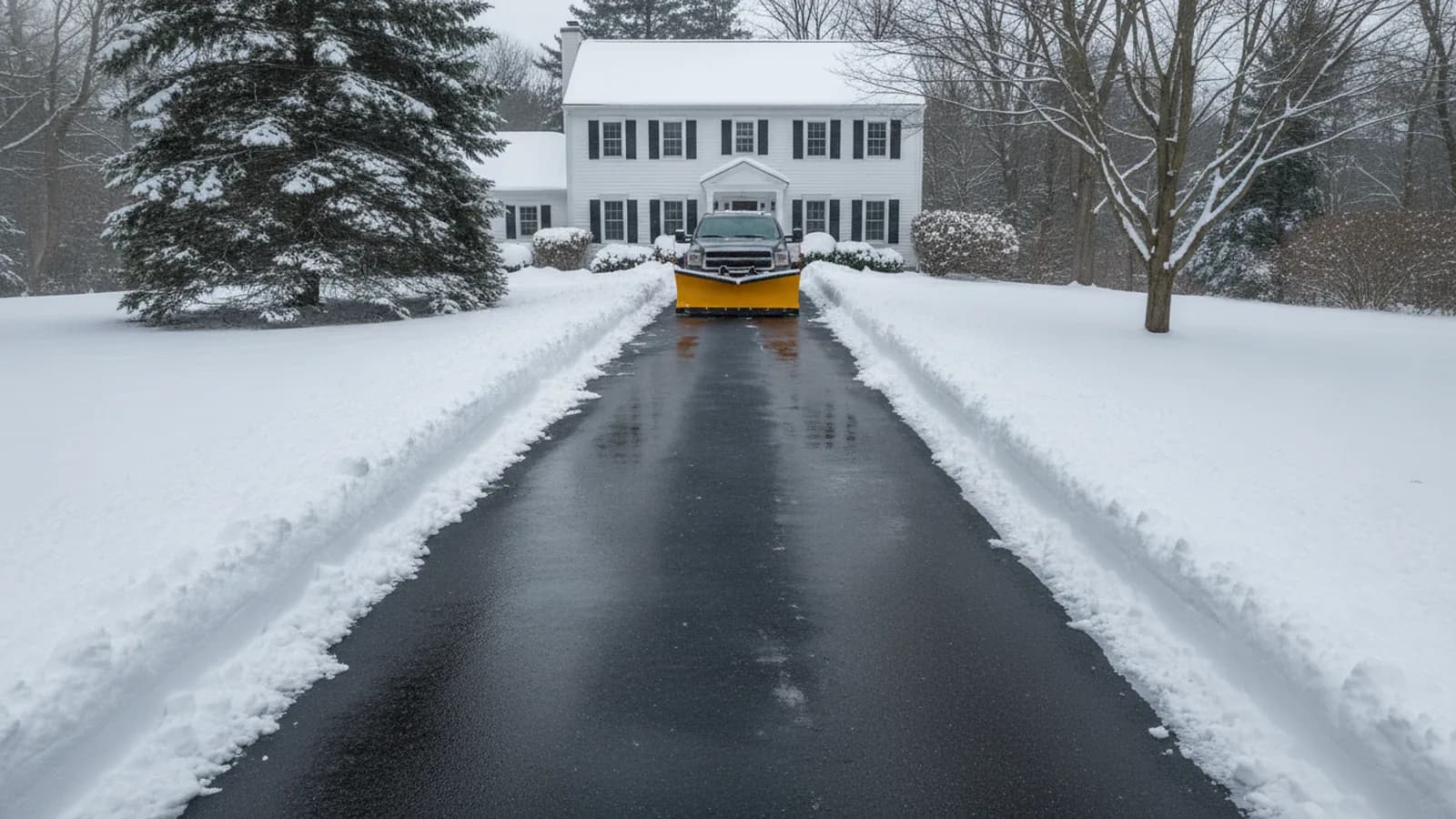
Every fall, Massachusetts homeowners face the same question: lock in a snow plowing contract for the season, or pay per storm and hope for a mild winter? With MetroWest towns like Framingham, Natick, and Milford often seeing somewhere around four feet of snow in a typical season, and some winters far more, the answer can swing your winter budget by hundreds of dollars.
This guide breaks down snow removal cost the honest way: typical market ranges, the factors that push a price up or down, how per-push and seasonal pricing really compare, and the contract terms worth reading before you sign anything.
Typical snow removal cost in Massachusetts
Prices vary a lot by town, driveway, and company, so treat these as rough market ranges, not quotes. For a standard residential driveway in eastern Massachusetts, a single plowing visit (often called a push) typically runs somewhere around $40 to $100, with long, wide, or difficult driveways landing higher.
Seasonal contracts for an average single-family driveway commonly fall somewhere in the range of a few hundred dollars up to $1,000 or more for the winter, depending on size, what is included, and how many storms the contract covers. Add-ons like shoveling walkways and steps, clearing in front of the garage, or sanding and salting are usually priced separately or bundled for an extra charge.
Commercial lots are a different category. They are usually priced by lot size, required response timing, and salting needs, and they almost always run on a written contract.
What drives snow plowing prices
Driveway size and shape: a short, straight two-car driveway takes minutes. A long rural driveway in Sherborn or Hopkinton, or one with a turnaround, takes much longer and needs more room to pile snow.
Slope and obstacles: steep grades, tight curves, stone walls, lamp posts, landscaping beds, and parked cars all slow the work and raise the risk of damage, which is reflected in the price.
Where the snow goes: if there is nowhere to push snow, it may need to be stacked higher or moved with a loader, which costs more. In big storms, running out of space is a real issue on small lots.
Trigger depth and frequency: a contract that plows at 2 inches will mean more visits than one that waits for 4 inches. More visits mean more cost, but also less snow packed down by your car tires.
Extras: walkway shoveling, steps, mailbox and hydrant clearing, and ice control (sand, salt, or a blend) each add time and material.
Per push vs seasonal contract: which is cheaper?
Per push (per event) pricing means you pay for each visit. It is simple and fair in a light winter. The downside is that in a heavy winter, with several big nor'easters and a long string of smaller storms, the bills add up quickly. Per-push customers can also end up lower on the route than seasonal customers during busy storms, depending on the company.
A seasonal contract means one price for the whole winter, usually covering an unlimited number of plowable storms or a set number of them. You get budget certainty and a guaranteed spot on the route. In a light winter, you may pay more than you would have per push. In a heavy one, you usually come out ahead.
A rough way to decide: divide the seasonal price by the per-push price. If the result is fewer storms than your area typically sees in a winter, the seasonal deal is likely the better value. Many MetroWest winters bring a dozen or more plowable events, though some bring far fewer.
Some companies also offer hybrid options, like a seasonal base with a cap on events, or extra charges only for storms above a certain depth (for example 12 inches or more), since huge storms often require multiple passes.
Trigger depth and when the plow actually shows up
The trigger depth is the snowfall amount that starts service. For residential driveways, 2 to 3 inches is common. Lower triggers mean cleaner surfaces but more visits; higher triggers can save money but leave you shoveling the small storms yourself.
During long storms, most plow operators clear during the storm to keep snow manageable, then come back for a final cleanup once it stops. Ask how many passes are included and whether the end-of-storm cleanup is part of the price.
Also ask about the plow bank at the end of the driveway. When the town plows the street, it often pushes a wall of heavy snow back across your driveway apron. Some contracts include a return visit to clear it; others do not.
What a good snow plowing contract should include
A clear contract protects both sides. Before you sign, look for: the price and payment schedule (one payment, monthly, or per visit); the service period, usually from roughly November or December through March or April; the trigger depth; how many storms are covered and what happens after that number; and what is included, such as driveway only, or walkways, steps, and ice treatment too.
It should also cover how heavy storms are billed, whether the town plow bank is cleared, and how damage is handled. Plows can scrape lawn edges, scuff pavement, or bump borders hidden under snow. Marking the edges of your driveway with reflective stakes before the first storm helps a lot, and a good company will walk the property with you before the season.
Finally, check that the company is insured. Snow work involves heavy equipment close to cars, garage doors, and people, and you want that risk covered by the contractor, not by you.
When to book snow removal
Book in the fall. Most reputable plow operators fill their routes by October and November, and the best spots go to returning customers first. Waiting until the first storm is in the forecast usually means fewer options and higher prices.
Fall is also the right time to prep: stake the driveway edges, pick up hoses and decorations, trim back low branches that hang over the driveway, and note any spots where water collects and could freeze. Pairing a fall cleanup with your snow contract is an easy way to get the yard ready for winter in one pass.
At Procopio Landscaping & Design, we offer snow plowing for homeowners and businesses across MetroWest, and every quote starts with a free estimate, with no visit fee, so you know exactly what is included before the first flake falls.
Frequently asked questions
- How much does snow removal cost per visit in Massachusetts?
- For a typical residential driveway in eastern Massachusetts, a single plow visit commonly runs somewhere around $40 to $100. Long, steep, or tight driveways and add-ons like walkway shoveling or salting cost more. Prices vary by company and town, so a free on-site estimate is the best way to get a real number.
- Is a seasonal snow plowing contract worth it?
- It often is in a normal or heavy Massachusetts winter. Divide the seasonal price by the per-push price. If the result is fewer storms than your area usually gets, the seasonal contract is likely cheaper. It also gives you a fixed budget and a guaranteed place on the route.
- What is a trigger depth in snow plowing?
- The trigger depth is the amount of snow that has to fall before the plow comes out, commonly 2 to 3 inches for residential driveways. A lower trigger means more visits and cleaner pavement; a higher trigger means fewer visits and lower cost.
- Does snow plowing include clearing the bank from the town plow?
- Not always. The heavy wall of snow left at the end of the driveway by the town plow is sometimes covered and sometimes billed separately. Ask before you sign so you are not surprised after the first big storm.
- When should I sign up for snow plowing in MetroWest?
- In the fall, ideally September through November. Most plow routes fill up before the first storm, and returning customers usually get priority. Signing early also gives time to stake the driveway and walk the property before the season starts.
Related services
Found this helpful? Make us a preferred source on Google.
Ready for an exact price?
Get a free, no-pressure in-home estimate. Real numbers for your home, not a phone guess.