
Mulch Installation Cost in Massachusetts: What You Really Pay For
· By Vantuir F. Procopio
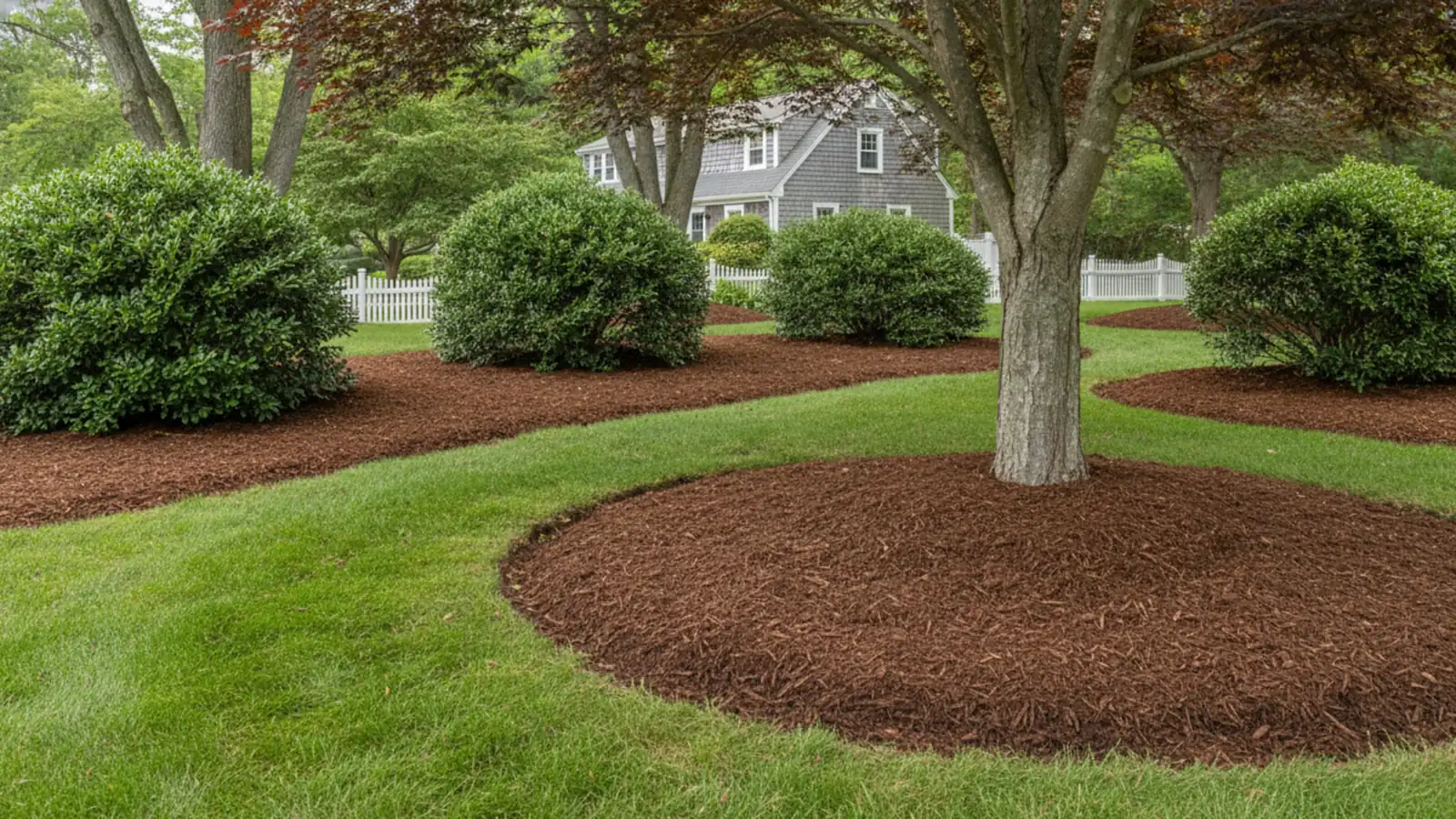
Mulch installation cost is one of the most common questions homeowners ask every spring. It looks like a simple job: dump some bark, spread it out, done. But two quotes for the same yard can be very different, and the reason is usually what happens before the mulch ever comes off the truck.
This guide explains how mulch installation is typically priced in MetroWest Massachusetts, what a fair quote should include, and which details make the price go up or down. The numbers below are general market ranges, not a price list, because every property is different.
Typical mulch installation cost in MetroWest
Most landscapers in Massachusetts price mulch by the cubic yard, installed. That means the material, delivery and labor are bundled into one number per yard. In the Framingham and Natick area, installed mulch typically lands somewhere in the range of roughly $80 to $150 per cubic yard, depending on the type of mulch and how much prep the beds need.
For a typical suburban home with foundation beds and a couple of island beds, that often means 5 to 10 yards. Many homeowners end up paying somewhere around a few hundred dollars for a small front yard refresh, and closer to $1,000 or more for larger lots with long bed lines, like the bigger properties you see in Sherborn or Hopkinton.
Some companies also have a minimum charge for small jobs, because a crew and truck still have to show up even if you only need 2 yards. Treat any number you find online, including these, as a starting point. The only way to know your real cost is to have someone look at the beds.
What a fair quote should include
A cheap quote is not always a good deal if it skips the steps that make mulch last. Before you compare prices, ask each company what is actually included. A complete mulch installation usually covers these steps:
Weeding the beds first, so you are not burying live weeds that push right back through. Cleaning out leaves and winter debris. Cutting a fresh edge along the lawn, which keeps grass from creeping in and gives the bed a sharp line. Spreading the mulch at the right depth, not too thin and not piled up. Keeping mulch pulled back from tree trunks, shrub stems and the house foundation. And cleaning up walkways and driveways when the job is done.
If one quote is much lower than the others, it is often because edging or weeding is left out, or because the mulch is spread so thin that you will be redoing it next year.
The factors that change the price
Volume is the biggest driver. More square feet of bed and deeper mulch means more yards. A bed that has not been mulched in years may need a full 3 inches, while a bed refreshed every spring may only need a 1 inch top-up.
Type of mulch matters too. Standard hemlock and dark bark mulch are usually the most affordable options in New England. Dyed black or brown mulch is often similar or slightly more. Premium double-ground or specialty mulches can cost more per yard.
Access affects labor. If the truck can dump close to the beds, the job goes fast. If every yard has to be wheelbarrowed up a slope, around a fence, or into a backyard with a narrow gate, labor time goes up. Many older homes in Holliston and Ashland have tight side yards and stone walls that make access slower.
Condition of the beds is the hidden one. Heavy weeds, overgrown edges, old mulch that has matted into a crust, or beds full of leaves from big oaks and maples all add prep time before any new mulch goes down.
Why depth matters (and how it affects your bill)
University extension guidance, including UMass Extension, generally recommends keeping total mulch depth around 2 to 3 inches. That is enough to hold moisture, keep soil temperatures more even and block most weed seeds from germinating.
More is not better. Mulch piled 5 or 6 inches deep can keep roots too wet and starve them of air. Mulch piled against tree trunks, the so-called mulch volcano, holds moisture against the bark and can lead to rot, pests and girdling roots over time.
Here is the cost side of this. If your beds already have 2 inches of old mulch that is still in decent shape, you may only need a thin top-dress, which means fewer yards and a lower bill. A good installer will check the existing depth instead of just selling you the maximum amount.
Best time to install mulch in Massachusetts
Spring is the most popular time. Most homeowners in MetroWest schedule mulch from late April through May, after the spring cleanup is done and the soil has started to warm. Mulching right after cleanup gives you a clean look for the whole season and gets ahead of the first flush of weeds.
Fall mulching also works. A layer applied in October or early November helps insulate roots of newer plantings through the freeze and thaw cycles of a Massachusetts winter. It can be a good option if spring schedules are booked or if you are planting shrubs in the fall.
Because spring is busy for every landscaper, booking early (March or early April) usually gives you better scheduling options. Pairing mulch with a spring cleanup is also common and can be more efficient than two separate visits.
DIY mulch vs hiring a pro
You can absolutely mulch your own beds. Buying bulk mulch and spreading it yourself saves the labor part of the cost. The tradeoff is time and effort: moving 8 yards by wheelbarrow is a full weekend of hard work for most people, and edging and weeding take even longer.
Hiring a crew makes the most sense when you have large bed areas, tough access, or beds that need real prep work. You also avoid the common DIY mistakes: mulch too thick, piled against trunks, or spread over weeds that come right back through.
If you want a clear number for your own yard, Procopio Landscaping & Design offers free estimates with no visit fee. We look at the beds, measure, and tell you exactly what is included before any work starts.
Frequently asked questions
- How much does mulch installation cost per yard in Massachusetts?
- In MetroWest Massachusetts, installed mulch typically runs somewhere around $80 to $150 per cubic yard, including material, delivery and labor. The final price depends on mulch type, how much prep the beds need, and how easy it is to get the mulch from the truck to the beds.
- Is edging included in mulch installation?
- It depends on the company, so always ask. A complete job usually includes cutting a fresh edge between the lawn and the bed, because it keeps grass out and holds the mulch in place. Some low quotes leave edging out, which is one reason prices can look so different.
- Should old mulch be removed before adding new mulch?
- Usually not. Old mulch breaks down and feeds the soil. If the existing layer is still under about 2 inches, a top-up is enough. Removal makes sense only when the old layer is very thick, matted into a crust, or moldy. Raking it loose before adding new mulch helps water get through.
- How long does mulch installation take?
- A typical suburban home with 5 to 10 yards of mulch is often done in a single day by a small crew. Larger properties, beds that need heavy weeding, or yards with difficult access can take longer.
- How often do I need to replace mulch?
- Most beds in Massachusetts need a fresh top layer once a year, usually in spring. Natural bark mulch breaks down and fades over the season. Some homeowners with dyed mulch can stretch it a bit longer, but a yearly refresh keeps weeds down and beds looking clean.
Found this helpful? Make us a preferred source on Google.
Ready for an exact price?
Get a free, no-pressure in-home estimate. Real numbers for your home, not a phone guess.