
Loam vs Topsoil: What Your Massachusetts Yard Actually Needs
· By Vantuir F. Procopio
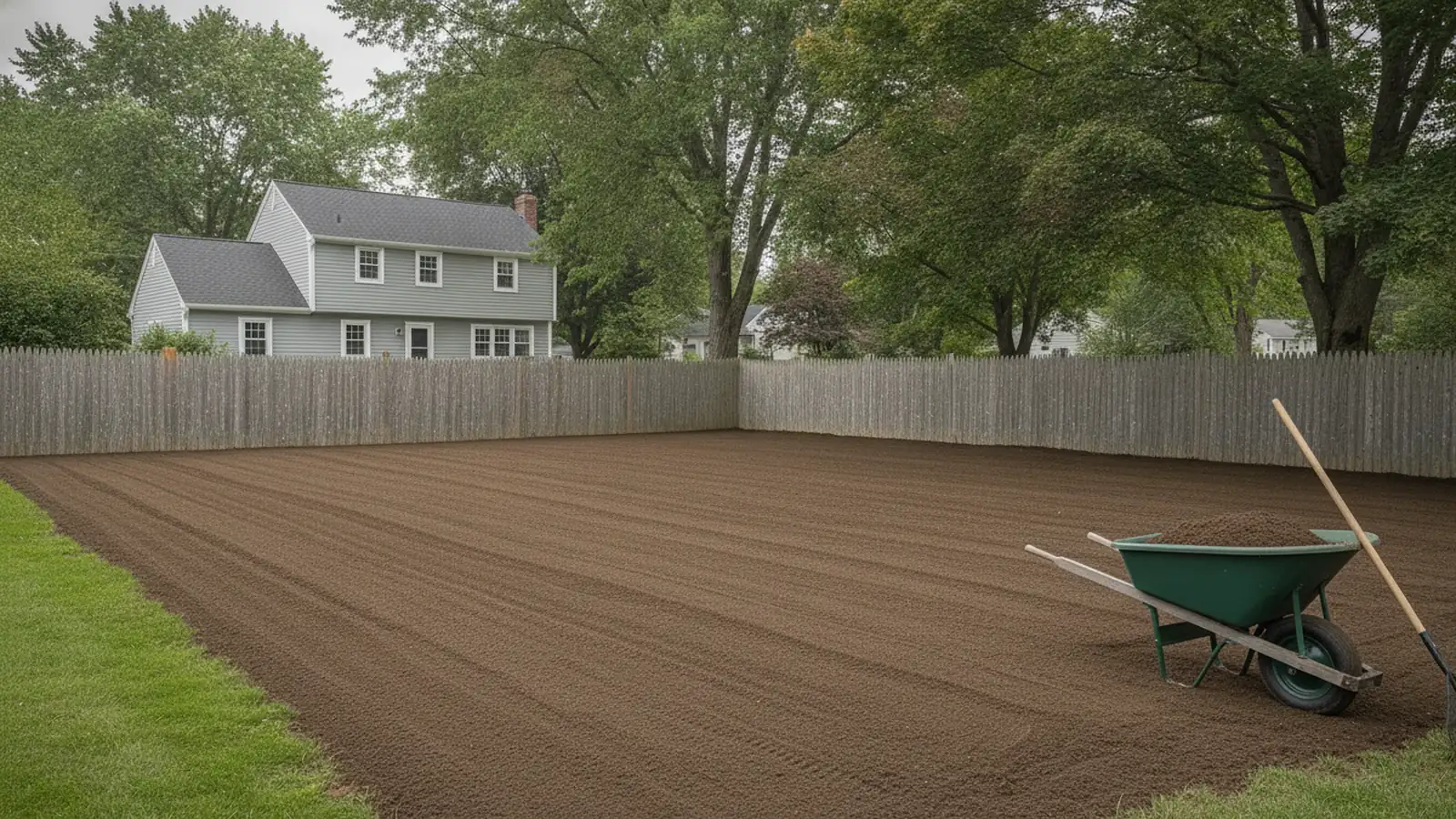
If you have ever called a landscape supplier in Massachusetts and asked for topsoil, there is a good chance they answered with a question: do you mean loam? Around here the two words get used almost interchangeably, but they are not quite the same thing, and the difference matters when you are paying for several truckloads.
This guide explains loam vs topsoil in plain terms, why so many MetroWest yards need help in the first place, when screened loam is worth it, and how to calculate how much loam you need without overbuying or coming up short.
Loam vs topsoil: the short answer
Topsoil is a location, not a recipe. It simply means the upper layer of soil, usually the top few inches to a foot, where most organic matter and root activity live. Topsoil can be sandy, heavy with clay, full of stones, or rich and dark. When a supplier sells generic topsoil, you are buying whatever that upper layer looked like at the source.
Loam is a soil texture. It describes a balanced mix of sand, silt, and clay, roughly in proportions that let water drain without the soil drying out too fast. Good loam holds nutrients, crumbles in your hand, and gives grass roots room to grow. In the Massachusetts trade, "loam" has also become the common name for the screened, lawn-ready soil sold by the yard.
So is loam the same as topsoil? Sometimes. Quality loam is a type of topsoil, but not every topsoil is loam. That is why the word on the delivery ticket matters less than what is actually in the truck.
Why so many MetroWest yards need new soil
Much of eastern and central Massachusetts sits on glacial till: a dense mix of clay, sand, gravel, and stones left behind when the glaciers retreated. Anyone who has tried to dig a hole in Framingham, Hopkinton, or Holliston knows the feeling of hitting rock six inches down. Those old stone walls across New England came out of the same ground.
On top of that, many newer homes were built after the original topsoil was stripped and sold or buried during construction. Builders often spread a thin layer back over compacted subsoil, sometimes only an inch or two. Grass planted on that kind of base tends to struggle: shallow roots, bare patches every August, puddles after a spring rain, and moss in the shady corners.
Heavy clay pockets drain slowly and compact easily, while sandy or gravelly spots dry out fast. A layer of good loam evens out those extremes and gives turf and plants a real root zone to work with.
What screened loam is and when it is worth paying for
Screened loam has been run through a mechanical screen to remove rocks, roots, sticks, and clumps. The result is fine, consistent, and easy to rake smooth. Unscreened loam is cheaper but can be full of debris that you will spend hours picking out, and it rarely gives you a level finish.
For a new lawn, a lawn renovation, or topdressing an existing lawn, screened loam is almost always the better buy. Seed needs good contact with fine soil to germinate, and a smooth grade makes mowing easier for years. For filling a deep hole or building up a low area that will be capped with better soil later, unscreened fill or lower-grade material can make sense.
Some suppliers also sell blended loam mixed with compost. That blend is a strong choice for garden beds and for clay-heavy yards, because the extra organic matter helps loosen heavy soil and feeds soil life.
How to tell good loam from bad loam
Before a full delivery, it is worth seeing or touching the material if you can. A few quick checks help:
Color and smell: good loam is dark brown and smells earthy. A sour or chemical smell can be a sign of poor material. Texture: squeeze a moist handful. It should hold together loosely and then crumble when you poke it. If it forms a sticky ribbon, it is heavy in clay. If it falls apart like beach sand, it is too sandy. Debris: screened loam should be mostly free of stones larger than a marble, roots, and trash.
Weed seeds are the hidden risk. Loam stored in open piles can carry seeds from nearby weeds, so buying from an established supplier with a steady turnover is usually safer than the cheapest load you can find. If you want hard numbers on pH and nutrients, the UMass Amherst Soil and Plant Nutrient Testing Lab offers affordable soil tests, and it is a good idea to test both your existing soil and the new material for a big project.
How much loam do I need? The simple math
Loam is sold by the cubic yard. One cubic yard is 27 cubic feet, which covers about 324 square feet at 1 inch deep, or about 81 square feet at 4 inches deep.
The formula: length (ft) x width (ft) x depth (inches) / 12 / 27 = cubic yards. Example: a 40 x 25 foot front lawn is 1,000 square feet. At 4 inches deep, that is 1,000 x 4 / 12 / 27, or about 12.3 cubic yards. At 6 inches, it is about 18.5 cubic yards.
How deep should you go? For a new lawn on poor or compacted soil, extension guidance generally recommends at least 4 to 6 inches of quality soil for a healthy root zone. For topdressing an existing lawn, a thin layer of about 1/4 to 1/2 inch is plenty; more than that can smother the grass. For new planting beds, 6 to 8 inches of loam or a loam and compost blend gives shrubs and perennials a better start.
Order about 10 percent extra. Loose loam settles and compacts once it is rolled and watered, and running short halfway through a job means a second delivery fee.
Timing and installation in Massachusetts
The best windows for loam and seed in Massachusetts are late summer into early fall, roughly mid August through late September, with spring as the second choice. Fall seeding lines up warm soil with cooler air and fewer weeds, which is why UMass Extension and most turf professionals favor it for cool-season grasses.
Good installation is more than dumping and spreading. The existing soil should be loosened or tilled so the new layer bonds with it instead of sitting on a hard shelf where water pools between layers. Then the loam is spread, graded so water runs away from the foundation, lightly rolled, seeded, and kept consistently moist until the grass is established.
Avoid working loam when it is soaking wet. Wet soil compacts badly and can turn into hard clods once it dries. After a heavy MetroWest rain, waiting a day or two usually pays off.
Frequently asked questions
- Is loam the same as topsoil?
- Not exactly. Topsoil is the upper layer of any soil, whatever its quality. Loam is a balanced mix of sand, silt, and clay that drains well and holds nutrients. Good loam is a type of topsoil, and in Massachusetts the word loam usually means screened, lawn-ready soil sold by the yard.
- How much loam do I need for a new lawn?
- Multiply length by width in feet, then by depth in inches, divide by 12, then divide by 27. That gives cubic yards. For a new lawn, plan on 4 to 6 inches of loam. A 1,000 square foot lawn at 4 inches needs about 12 to 13 cubic yards, plus around 10 percent extra for settling.
- Can I put loam right on top of my existing grass?
- For topdressing, yes, as long as you keep it thin, about 1/4 to 1/2 inch, and rake it into the turf so the grass blades still poke through. Piling several inches on top of living grass will smother it. For a full renovation, the old turf is usually removed or killed and the soil loosened before new loam goes down.
- What does loam installation cost in Massachusetts?
- It depends on how many yards you need, whether the loam is screened or blended with compost, delivery distance, access for equipment, and how much grading and prep is involved. Material is only part of the price; spreading, grading, and seeding are the labor side. The most reliable way to know is a free on-site estimate, with no visit fee.
- When is the best time to loam and seed in MetroWest?
- Late summer to early fall, roughly mid August through September, is usually best for cool-season grass in Massachusetts. Spring is the second choice. Fall gives warm soil, cooler air, and less weed pressure, so new grass establishes before winter.
Found this helpful? Make us a preferred source on Google.
Ready for an exact price?
Get a free, no-pressure in-home estimate. Real numbers for your home, not a phone guess.