
Lawn Care in Natick, MA: A Season-by-Season Calendar
· By Vantuir F. Procopio
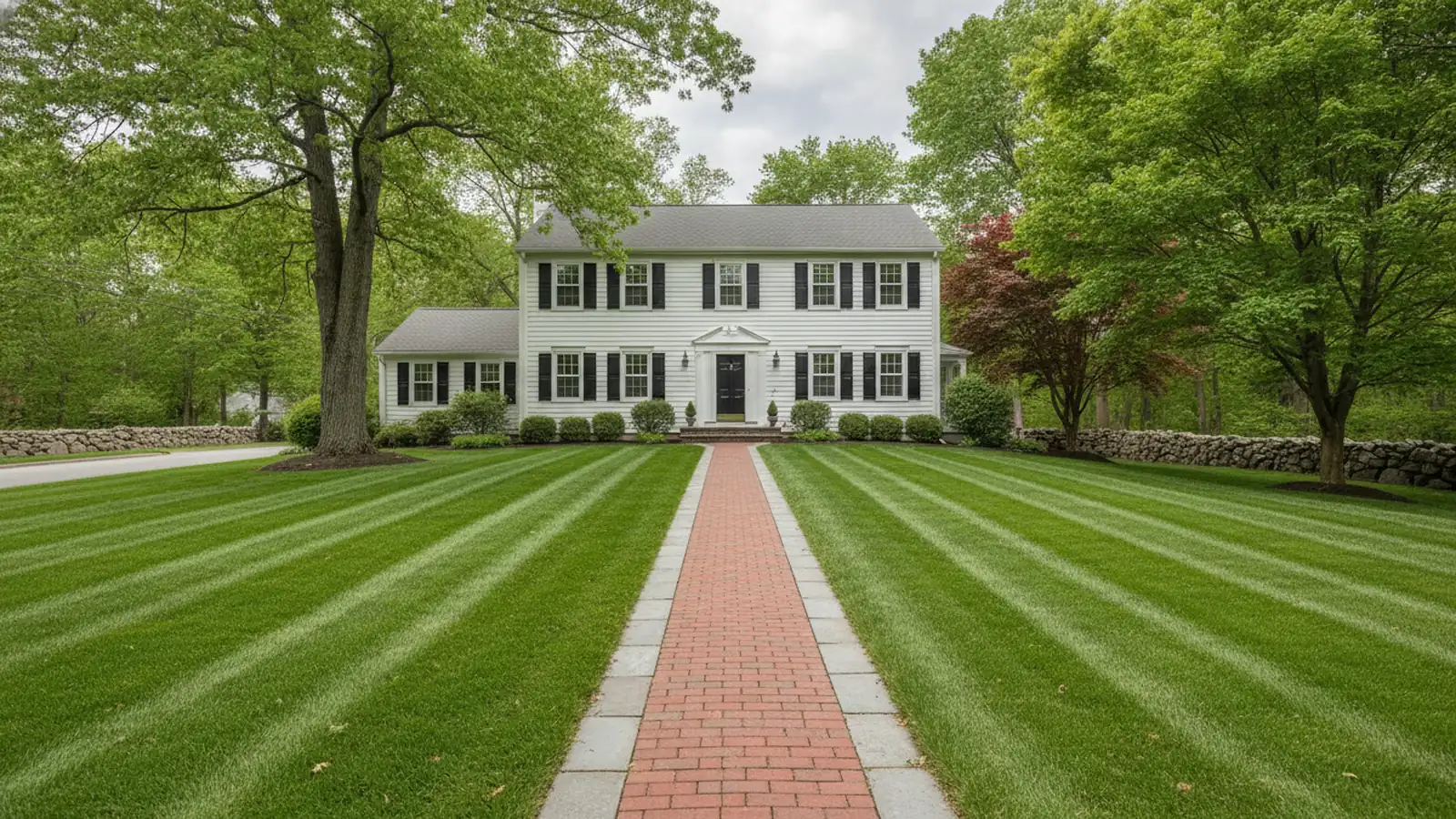
Lawn care in Natick, MA follows the rhythm of a New England year: a short, muddy spring, a summer that can swing from soaking rain to drought, a long and beautiful fall, and a winter that puts everything to sleep. Natick homes range from older lots near Natick Center and South Natick to newer neighborhoods off Route 9 and around Lake Cochituate, but the calendar that keeps a lawn healthy is much the same.
This guide walks through the season month by month, with the town rules that actually affect your yard, like summer water restrictions and the fall leaf collection. Use it as a checklist whether you do the work yourself or hire help.
Early spring (late March to April): clean up before you grow
Once the snow is gone and the ground is no longer soggy, start with a spring cleanup. Rake out leaves and debris that blew in over winter, pick up sticks and branches, and look for matted patches where snow sat the longest. Light raking fluffs up those areas and helps them dry out.
Wait until the soil firms up before you bring heavy equipment or a lot of foot traffic onto the lawn. Natick soils can stay wet for weeks in spring, and walking on soft ground compacts it, which makes it harder for roots to grow later.
This is also the time to edge beds, cut back last year's perennials and check shrubs for winter damage. Plow damage along the driveway and salt burn near the street are common, and the bare spots they leave are the first places weeds move in.
Late spring (May to June): the first mows set the tone
Cool-season grasses, the kind that grow in most Natick lawns, put on their fastest growth in late spring. That means mowing often, usually every week, so you never remove more than about one third of the blade at a time.
Keep the mower set high. For most Massachusetts lawns, a cutting height of roughly 3 to 3.5 inches is a good target. Taller grass shades the soil, holds moisture better and crowds out weeds. Scalping a lawn short in May is one of the most common reasons it struggles in July.
Leave the clippings on the lawn when they are short and spread out. They break down quickly and return nutrients to the soil. Keep mower blades sharp, because a dull blade tears the grass and leaves brown, frayed tips.
Late spring is also a good moment to refresh mulch in planting beds. A fresh layer before summer helps the soil hold water when watering is limited.
Summer (July to August): working with Natick's water rules
Natick's water system sees its highest demand in summer, mostly from lawn and garden watering. During dry stretches the town puts mandatory water use restrictions in place. Under its drought plan, a Level 1 (mild drought) restriction limits nonessential outdoor watering to no more than one day a week, before 9 a.m. and after 5 p.m., while hand watering of gardens with a hose, watering can or drip irrigation may still be allowed. At Level 2 (significant drought), nonessential outdoor watering is banned, with the same exceptions for hand watering of ornamentals and gardens.
Restrictions change with conditions, so check the town's Water and Sewer Division page each summer for the current level and rules.
The good news is that a healthy, tall lawn can handle a dry summer. Cool-season grass naturally slows down and may turn tan in a long dry spell. That is dormancy, not death, and it usually greens up when cooler, wetter weather returns. When you can water, water deeply and early in the morning rather than lightly every day.
Keep mowing, but less often, and raise the deck to the top of the range. Avoid mowing during the hottest part of the day or when the lawn is drought-stressed and crunchy underfoot.
Early fall (September to mid-October): the best season for your lawn
Ask anyone who takes care of lawns in New England and they will tell you fall is the most important season. Warm soil and cool air are ideal for grass roots, and weeds slow down. If you plan to repair thin areas, early fall is the best time to do it.
Bare or thin spots can be raked out, topped with a thin layer of good loam and seeded. Keep new seed moist until it is established, which is much easier in September than in July. Mow new grass only after it reaches normal mowing height.
Keep mowing on a regular schedule as long as the grass is growing, and keep the height up until the last couple of cuts of the season.
Late fall (late October to November): leaves and Natick's curbside pickup
Natick has plenty of mature oaks and maples, and when they let go, they let go all at once. Do not let leaves sit on the lawn for weeks. A thick, wet layer blocks light, holds moisture against the grass and can lead to snow mold once winter arrives. A light layer can be mulched with the mower, but heavy accumulation needs to come off.
The town runs a fall curbside lawn and leaf collection, which has typically started around the second week of November. Leaves go in paper yard waste bags, not plastic, and need to be at the curb by 7 a.m. on your scheduled day. Residents can also bring yard waste to the compost area at the Recycling Center on West Street, where leaves are composted and finished compost is available for residents to take home. Check the DPW page for this year's dates and site hours.
Finish with a final mow a little shorter than your summer height, a full fall cleanup of leaves from lawn and beds, and a last look at shrubs that might need pruning or protection before snow.
Winter (December to March): protect what you built
There is not much to do on the lawn in winter, and that is the point. Stay off frozen grass when you can, because foot traffic on frozen blades breaks them. Mark driveway and walkway edges before the ground freezes so plows and snowblowers stay on the pavement.
Use salt sparingly near lawn edges and beds, since salt damage along the street side of Natick lawns is one of the most common things to fix in spring. Then, when the snow melts, the calendar starts over.
Doing it yourself vs getting help
Many Natick homeowners do most of this calendar on their own and hire out the heavy parts, like spring and fall cleanups or weekly mowing in peak season. If you want help, Procopio Landscaping & Design is based in neighboring Framingham and works in Natick on mowing, cleanups, mulch and seeding with loam. Estimates are free, there is no visit fee, and the crew speaks English, Portuguese and Spanish.
Frequently asked questions
- How high should I mow my lawn in Natick?
- For the cool-season grasses common in Natick lawns, a height of roughly 3 to 3.5 inches works well, and a bit higher in summer heat. Never cut more than about one third of the blade at once.
- Can I water my lawn in Natick during the summer?
- It depends on the current restriction level. Under Level 1, nonessential outdoor watering is limited to one day a week before 9 a.m. or after 5 p.m. Under Level 2 it is banned, though hand watering of gardens may be allowed. Check the town's water page for the current level.
- When is leaf pickup in Natick?
- Natick's fall curbside lawn and leaf collection has typically begun around the second week of November. Use paper bags only and have them at the curb by 7 a.m. Check the DPW page for this year's schedule.
- What is the best time to seed a lawn in Natick?
- Early fall, roughly late August through September, is usually the best window. The soil is still warm, nights are cool and weeds are slowing down, so new grass establishes faster than in spring.
- Is my brown lawn dead after a dry Natick summer?
- Usually not. Cool-season grass often goes dormant and turns tan in drought, then greens up when cooler, wetter weather returns. Keep mowing high and avoid heavy traffic until it recovers.
Found this helpful? Make us a preferred source on Google.
Ready for an exact price?
Get a free, no-pressure in-home estimate. Real numbers for your home, not a phone guess.