
Lawn Care in Medway, MA: A Spring Guide to Loam, Seed and Mulch
· By Vantuir F. Procopio
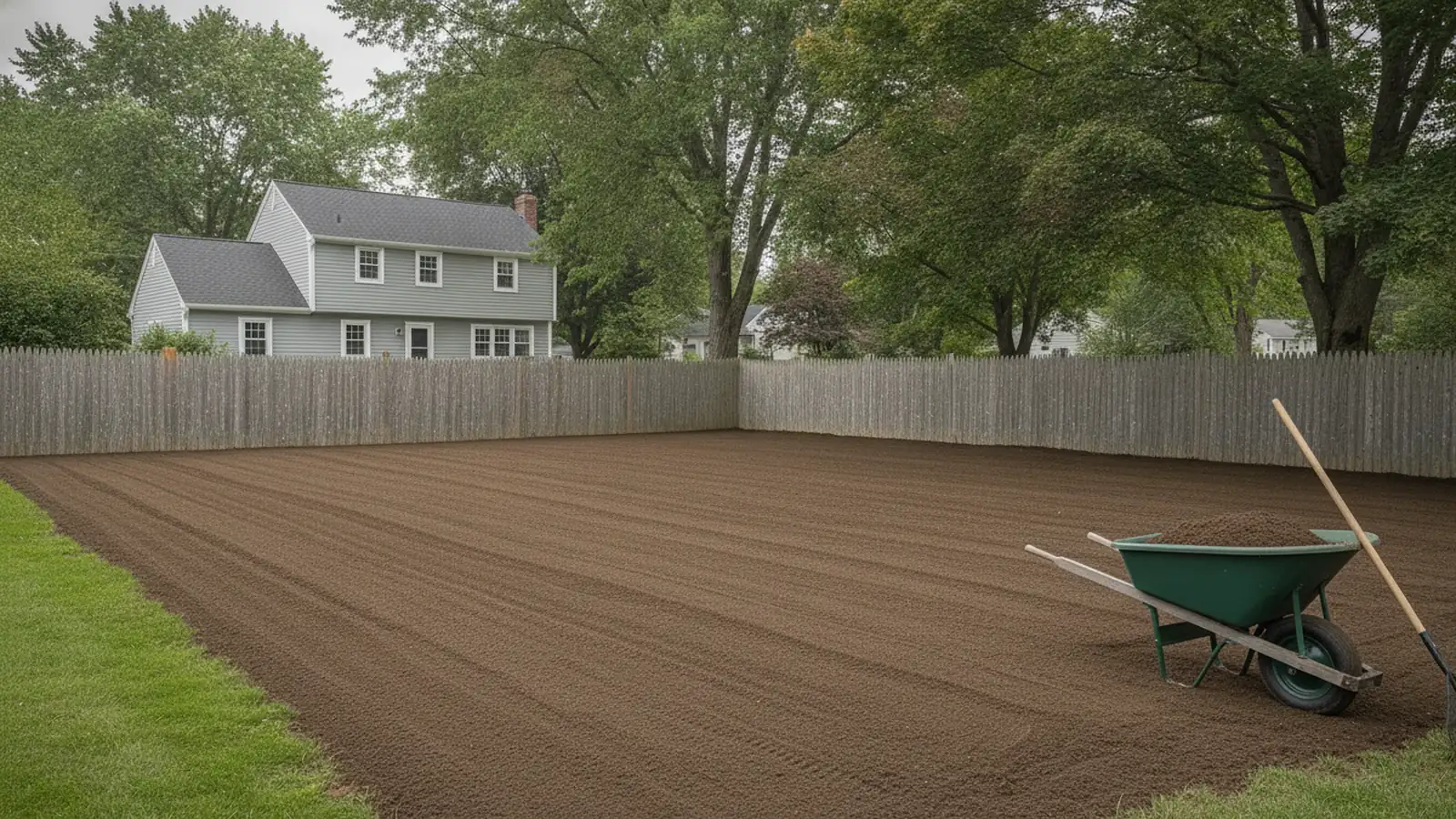
Good lawn care in Medway, MA starts in spring, not in July when the grass is already thin and brown. The weeks between snowmelt and Memorial Day decide how your yard looks for the rest of the season. That is when you fix bare spots, add loam where the soil has worn out, put seed down, and mulch your beds before the weeds wake up.
This guide walks through that spring window step by step, with notes specific to Medway: how the town handles yard waste, why watering rules matter for new seed, and how to keep clippings and leaves out of the storm drains that feed the Charles River. Use it as a checklist whether you do the work yourself or hire it out.
Start with a spring cleanup, not a bag of seed
It is tempting to throw seed on the bare patches the first warm weekend in April. Hold off for a week and clean up first. Seed that lands on matted grass, old leaves and winter debris never touches soil, and most of it washes away or feeds the birds.
A proper spring cleanup in Medway means raking out the dead thatch and snow mold, picking up branches that came down over the winter, clearing leaves that blew into beds and against the foundation, and cutting back last year's perennials. Check the strip along the street too, where plows leave sand and compacted soil.
Once the yard is clean, you can see which areas are thin, which are bare and where water puddles.
When the soil needs loam (and when it does not)
Many Medway yards were graded when the house was built, and the original topsoil was stripped or thinned out. What is left can be a few inches of tired soil over sandy fill or heavy, stony subsoil. Grass will grow on that, but it struggles every August.
Loam is screened topsoil with a good mix of sand, silt and organic matter. It earns its cost in a few situations: bare areas where you can see subsoil or rocks, low spots that hold water, ruts from cars or plows, and new lawn areas where a bed or old play set used to be. For a lawn that is simply thin, a light top dressing (roughly a quarter to a half inch raked into the existing grass) is usually enough. For bare ground, most pros spread a few inches of loam, rake it smooth and roll it lightly before seeding.
If you are not sure, take a soil test. The UMass Extension soil lab tests samples from Massachusetts homeowners for a modest fee and tells you your pH and what the soil is missing. New England soils tend to run acidic, so lime is a common recommendation, but the test is what tells you how much.
Seeding in spring around Medway's watering rules
New seed needs steady moisture for two to three weeks.
This is where Medway's water rules come in. In past years the town has announced seasonal outdoor water restrictions running from May 1 through September 30, which have limited outdoor watering to early morning and evening hours, set odd and even days by house number, and in some years banned in-ground sprinkler systems outright. The rules can change year to year depending on drought and the town's water supply, so check the town's DPW page for the current schedule before you plan a seeding project.
What that means in practice: if you seed in spring, aim for April through mid May so the seed germinates before the restrictions and the heat arrive. Use a sun and shade mix suited to New England (blends with tall fescue and Kentucky bluegrass hold up well in sunny yards, fine fescues in shade). Cover the seed with a thin layer of loam or straw to hold moisture. And if your yard is large or bare, consider doing the big renovation in late August or September instead, when cooler nights and fall rain do most of the watering for you.
Mulch your beds before the weeds wake up
Mulch is the other half of a good spring. A fresh layer suppresses weeds and holds moisture through dry weeks. Timing matters: spread it after the beds are cleaned and edged, and before the summer weeds germinate, which in the Medway area usually means late April through May.
A few rules keep mulch doing its job. Keep the total depth around two to three inches. More than that can suffocate roots and hold too much moisture. Never pile it against tree trunks in a cone (the so-called mulch volcano), because bark that stays wet invites rot and insects. Leave a small gap around the base of shrubs. And refresh rather than stack: if last year's layer is still thick, rake it loose and top it with an inch instead of adding three more.
Handling yard waste the Medway way
Spring work creates a lot of debris, and Medway gives residents a simple place to take it. Households in the town's trash and recycling program can bring leaves, grass clippings and brush to the Recycling Center on Broad Street at no extra cost with a valid sticker. The town has listed limits on logs (under 12 inches wide and about 1 to 4 feet long) and has asked residents not to bring pine. Hours change between the summer and winter seasons, so check the DPW's current schedule before loading the truck.
Medway's DPW has repeatedly asked residents to keep grass clippings, leaves and other yard waste out of the street, off sidewalks, and away from catch basins and stormwater basins. Clippings blown into the road wash into the drains, clog them, and carry nutrients into local streams and the Charles River. Blow clippings back onto the lawn instead.
Better yet, leave them there. The DPW has also encouraged grasscycling: mowing regularly and letting short clippings fall back into the turf, where they break down quickly and return nitrogen to the soil.
A simple Medway lawn calendar
Late March to mid April: spring cleanup, rake out thatch and snow mold, repair plow damage along the street, soil test if you have never done one.
Mid April to mid May: loam bare and low spots, overseed thin areas, edge and mulch beds, first mow once the grass reaches about three and a half to four inches.
Late May through August: mow weekly at three to four inches tall, never take more than a third of the blade at once, leave clippings on the lawn, water deeply and early when the town's rules allow.
Late August to late September: the best window for major seeding or lawn renovation. October and November: fall cleanup, final mow, clear leaves before they mat down under the snow.
If you would rather hand off the heavy parts, Procopio Landscaping & Design is a family-owned crew based in neighboring Framingham that handles spring cleanups, loam, seeding prep and mulch in Medway. Estimates are free, there is no visit fee, and you can talk to us in English, Portuguese or Spanish.
Frequently asked questions
- When is the best time to seed a lawn in Medway, MA?
- Late August through September is the best window for major seeding in Medway, because soil is warm, nights are cool and fall rain helps with watering. Spring seeding works too if you get it done between April and mid May, before summer heat and the town's seasonal watering restrictions make it hard to keep new seed moist.
- How much loam do I need for bare spots?
- For bare ground, most landscapers spread a few inches of screened loam, rake it level, roll it lightly and then seed. For a lawn that is just thin, a light top dressing of about a quarter to a half inch raked into the existing grass is usually enough. A soil test from UMass Extension helps you know whether you also need lime.
- Where can I get rid of leaves and grass clippings in Medway?
- Residents who participate in Medway's trash and recycling program can bring leaves, grass clippings and brush to the town Recycling Center on Broad Street at no extra cost with a valid sticker. Hours change by season, so check the DPW's current schedule. Do not blow yard waste into the street or storm drains.
- Does Medway have lawn watering restrictions?
- Medway has announced seasonal outdoor water restrictions in past years, typically running May 1 through September 30, with limits on time of day, odd and even watering days, and at times a ban on in-ground sprinklers. The details can change each year, so check the town's DPW and water notices for the current rules.
- How deep should mulch be in garden beds?
- Two to three inches total is the right depth for most beds. Keep mulch pulled back from tree trunks and shrub stems, and if last year's layer is still thick, loosen it and add about an inch instead of piling on more.
Serving
Found this helpful? Make us a preferred source on Google.
Ready for an exact price?
Get a free, no-pressure in-home estimate. Real numbers for your home, not a phone guess.