
How Often to Mow Your Lawn in Massachusetts, Month by Month
· By Vantuir F. Procopio
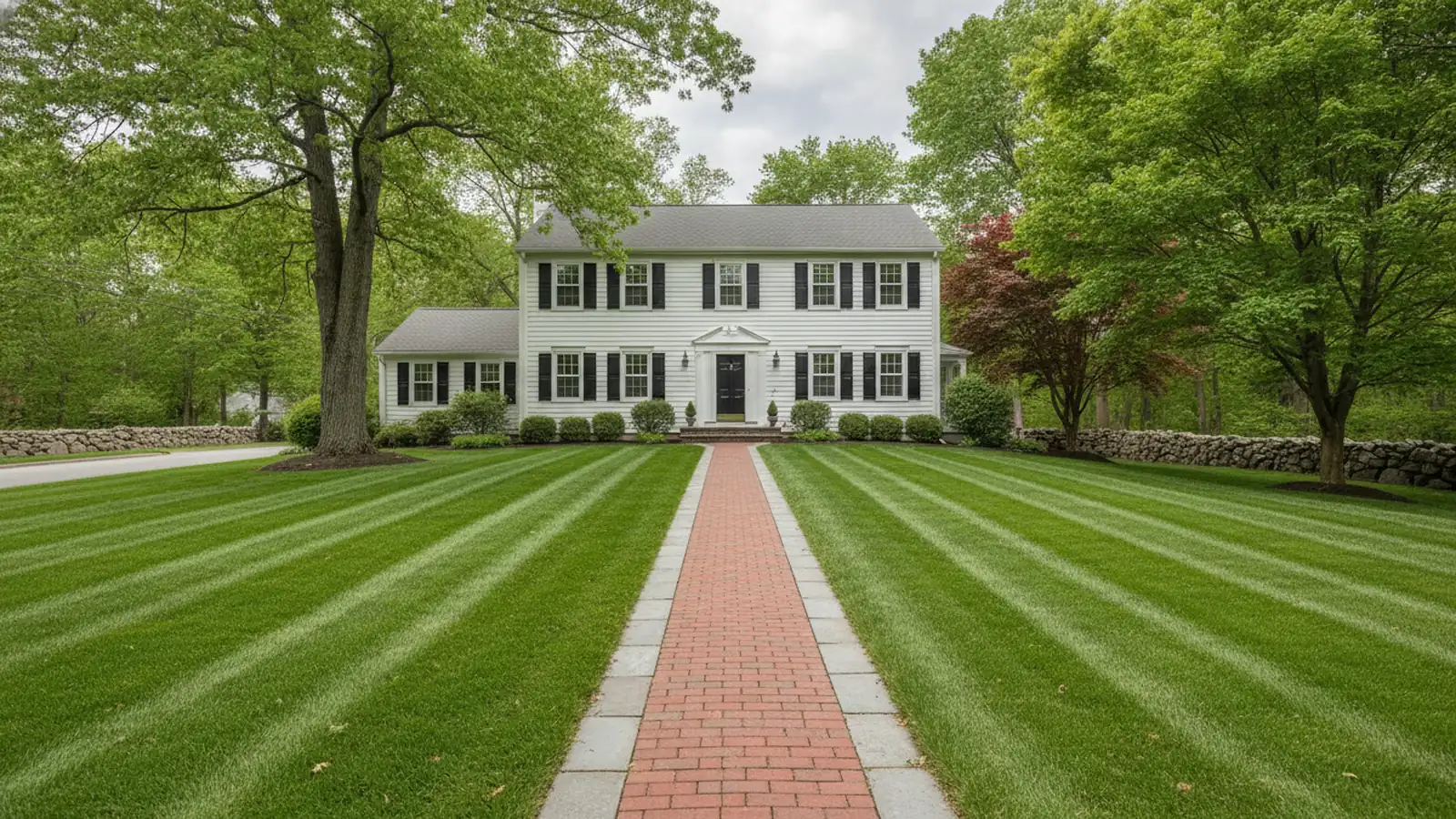
How often to mow your lawn is not a fixed number. In Massachusetts, cool-season grass grows like crazy in May, slows to a crawl in a dry August, then picks back up in September. A good mowing schedule follows the grass, not the calendar.
Here is how often to mow in each part of the MetroWest season, the simple rule that decides it, and when every-other-week mowing is fine versus when it hurts the lawn.
The short answer: weekly for most of the season
For most lawns in MetroWest, mowing once a week from late April through October keeps the grass healthy and looking clean. During peak spring growth, a well-fed lawn may even need a cut every five days. In a hot, dry summer stretch, every 10 to 14 days is often enough.
The reason weekly works so well is the grass itself. Most Massachusetts lawns are a mix of cool-season grasses such as Kentucky bluegrass, fine fescue, perennial ryegrass and tall fescue. These grasses grow fastest when temperatures sit roughly between 60 and 75 degrees, which describes much of May, June and September here.
The one-third rule decides how often to mow
University turf programs, including extension guidance used across New England, generally recommend never removing more than one-third of the grass blade in a single mowing. Cut off more than that and the plant loses too much of its leaf surface at once, which stresses the roots and slows recovery.
Put that together with the recommended height and you get your schedule. If you keep the lawn at about 3 inches, you should mow before it reaches about 4.5 inches. In May, cool-season grass can grow that much in well under a week. In August, it may take two weeks or more.
So the real question is not how many days have passed. It is how tall the grass is. Watch the lawn, and mow when it is about one-third taller than your target height.
How often to mow, month by month in MetroWest
April: Growth starts once the soil warms, usually mid to late April in Framingham and the surrounding towns. The first cut is typically done when the grass is actively growing and the ground is firm enough not to rut. Expect to mow every 7 to 10 days.
May and June: This is peak growth. Spring rain and mild temperatures push cool-season grass hard. Weekly is the minimum for most lawns, and some well-watered or recently fertilized lawns need a cut every five or six days to follow the one-third rule.
July and August: Heat and dry spells slow growth, and many unirrigated lawns go partly dormant and turn tan. Mow every 10 to 14 days, or skip a week if the grass has barely grown. Keep the mower higher in this stretch. Avoid mowing dormant, brown grass, because the traffic alone can damage it.
September and October: Cooler nights and fall rain bring a second growth surge. Weekly mowing usually returns. Fall is also when leaves start coming down, so regular mowing helps shred light leaf cover before it mats on the lawn.
November: Growth slows as frosts arrive. One or two final cuts, often in early to mid November, finish the season. Many lawn programs lower the last cut slightly, to around 2.5 to 3 inches, which can help limit snow mold over the long Massachusetts winter. Do not scalp it.
The right mowing height for Massachusetts lawns
How often you mow and how high you mow work together. For most cool-season lawns in Massachusetts, a height of about 3 to 3.5 inches is the sweet spot. Taller grass shades the soil, which keeps it cooler, holds moisture longer and makes it harder for crabgrass seeds to germinate.
Cutting short to stretch out the time between mowings backfires. A lawn mowed at 2 inches stresses faster in July heat, shows more bare spots and invites weeds. If you need to mow less often, raise the deck rather than lower it.
Sharp blades matter too. A dull blade tears grass tips, leaving ragged brown edges that lose water and can open the door to disease. Most professional crews sharpen blades frequently during the season for this reason.
Weekly vs every-other-week mowing: which is right for you?
Every-other-week mowing can work for some properties. It is a reasonable fit for slow-growing lawns, shady lots under big oaks and maples, and the summer slowdown. It is usually a poor fit for the spring surge, when two weeks of growth means cutting off far more than one-third of the blade.
When a lawn goes two weeks in May, you often see heavy clumps of clippings, a yellowish look for a few days after the cut, and a mower that struggles. Crews may need a second pass, and the extra cleanup is why per-visit prices for biweekly service are often higher.
A flexible approach works well in MetroWest: weekly in spring and fall, then every 10 to 14 days in midsummer if the lawn slows down. A good lawn service adjusts the schedule to the grass rather than mowing on autopilot.
Other habits that make mowing frequency work
Leave the clippings. Short clippings from regular mowing break down quickly and return nutrients to the soil. This practice, often called grasscycling, is another reason weekly mowing beats waiting.
Avoid mowing wet grass when you can. Wet blades clump, cut unevenly and can spread disease, and heavy mowers can rut soft lawns, especially on the clay-heavy soils found in parts of MetroWest.
Change your pattern. Mowing in the same direction every time can compact soil and make grass lean. Alternating directions keeps the cut even.
If keeping up with the schedule is the hard part, that is exactly what a regular mowing service solves. Procopio Landscaping & Design mows lawns across Framingham, Natick and nearby towns on a steady weekly schedule, and estimates are free with no visit fee.
Frequently asked questions
- How often should I mow my lawn in Massachusetts?
- Most Massachusetts lawns need mowing about once a week from late April through October. In May and June peak growth, some lawns need a cut every five or six days. During hot, dry stretches in July and August, every 10 to 14 days is often enough.
- Is it OK to mow every two weeks?
- It can be in midsummer or on slow-growing, shady lawns. In spring and early fall, two weeks of growth usually means removing more than one-third of the grass blade at once, which stresses the lawn and leaves clumps of clippings.
- What height should I mow my lawn in Massachusetts?
- For the cool-season grasses common in Massachusetts, extension guidance generally recommends about 3 to 3.5 inches during the season. Taller grass holds moisture better, shades out weeds and handles summer heat more easily.
- When should I stop mowing in the fall?
- Keep mowing as long as the grass is growing, which in MetroWest usually means into early or mid November. The final cut is often set slightly lower, around 2.5 to 3 inches, to help reduce snow mold over winter.
- Should I mow a brown, dormant lawn in summer?
- Usually no. If the grass has gone dormant during a dry spell and is not growing, mowing adds stress and wheel traffic without any benefit. Wait until rain brings back new growth.
Related services
Serving
Found this helpful? Make us a preferred source on Google.
Ready for an exact price?
Get a free, no-pressure in-home estimate. Real numbers for your home, not a phone guess.