
How Much Mulch Do I Need? A Simple Yard Calculator
· By Vantuir F. Procopio
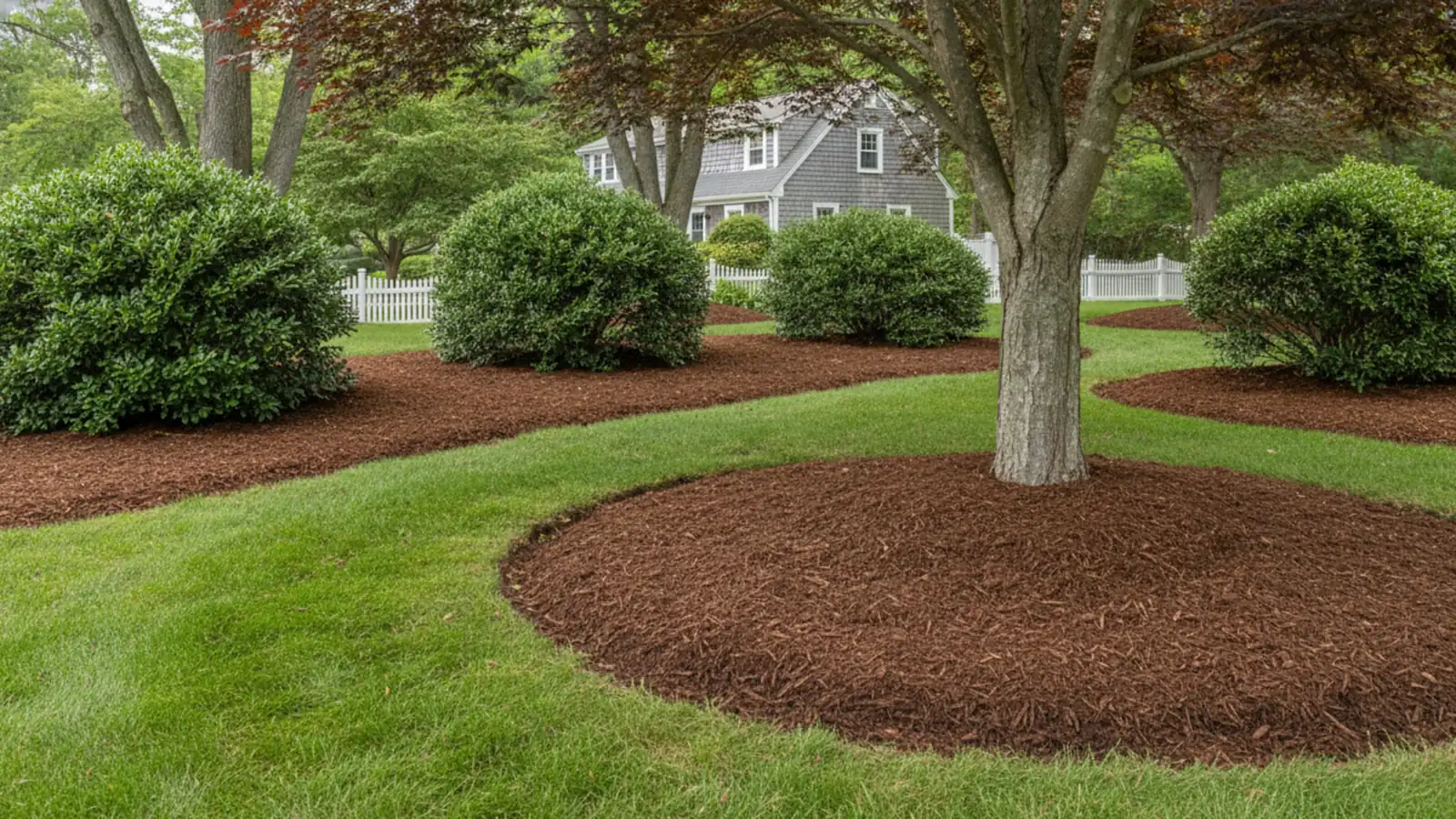
How much mulch do I need? It is one of the first questions homeowners ask each spring, and ordering too little means a second trip, while ordering too much leaves a pile on the driveway. The good news is that the math is simple once you know your bed area and the depth you want.
This guide walks through measuring your beds, converting square feet to cubic yards, deciding between bags and bulk, and what mulch by the yard typically costs around Framingham, Natick and the rest of MetroWest Massachusetts.
Step 1: Measure the square footage of your beds
Grab a tape measure and sketch your beds on paper. For a rectangular bed, multiply length by width. A bed 30 feet long and 4 feet deep is 120 square feet.
For a curved or irregular bed, break it into rough rectangles and add them up, or measure the length along the middle and multiply by the average width. For a circle around a tree, multiply the radius by itself and then by 3.14. A ring 4 feet out from the trunk is about 50 square feet.
Write down each bed and add the totals. Foundation beds, tree rings and the strip along the driveway add up faster than most people expect, so it pays to measure rather than guess.
Step 2: Choose the right depth
For most landscape beds, 2 to 3 inches of mulch is the target, which matches the general guidance from UMass Extension and other horticulture programs. That depth holds moisture, keeps weeds down and moderates soil temperature without smothering plant roots.
If your beds already have a decent layer from last year, you usually only need to top dress with about 1 inch to restore color and bring the total back to 2 to 3 inches. Piling a full 3 inches on top of old mulch every year builds up a thick, matted layer that can shed water and starve roots of oxygen.
For new beds or bare soil, plan on the full 3 inches. Our clay and rocky MetroWest soils dry and crust in July and August, and a full layer makes a real difference.
Step 3: Convert to cubic yards with one formula
Bulk mulch is sold by the cubic yard. Use this formula: square feet multiplied by depth in inches, divided by 324, equals cubic yards.
Example: 120 square feet at 3 inches deep is 120 times 3, which is 360. Divide by 324 and you get about 1.1 cubic yards. At 2 inches, the same bed needs about 0.75 cubic yards.
As a quick reference, one cubic yard of mulch covers about 324 square feet at 1 inch, about 162 square feet at 2 inches, and about 108 square feet at 3 inches.
Round up slightly. Mulch settles, beds are rarely perfect shapes, and a small extra amount is easier to deal with than coming up short in the middle of the job.
Bags vs bulk: how many bags of mulch is a yard?
Bagged mulch at garden centers usually comes in 2 cubic foot bags. A cubic yard is 27 cubic feet, so it takes about 13.5 bags to equal one yard.
Bags make sense for small jobs: a single tree ring, a short walkway border or touching up a few thin spots. They are clean, easy to carry and you can store leftovers.
Bulk is usually the better value once you need more than about 2 yards. A typical MetroWest home with foundation beds, a few tree rings and a front walkway often needs somewhere in the range of 3 to 8 yards, and buying that many bags means a lot of plastic and a lot of trips.
How much is mulch by the yard in Massachusetts?
Prices change by supplier, season and mulch type, so treat these as rough ranges. In MetroWest Massachusetts, bulk mulch typically runs roughly $35 to $65 per cubic yard for the material alone. Basic hemlock or dyed mulch tends to sit at the lower to middle end, and premium double ground bark or specialty blends at the higher end.
Delivery is usually extra. Many yards charge a flat delivery fee, often in the range of $50 to $100 or more depending on distance and load size, and some have a minimum order.
If you hire someone to install it, you are also paying for labor: weeding, edging, spreading and cleanup. That is why installed mulch is priced per job rather than just per yard. Procopio Landscaping & Design gives free estimates for mulch installation, with no visit fee, so you can compare the installed price against doing it yourself.
How to spread mulch the right way
Weed first and cut a clean edge between the bed and the lawn. A crisp edge keeps mulch from washing into the grass and gives the whole yard a finished look.
Spread mulch evenly to the target depth. Keep it 3 to 6 inches away from tree trunks and a couple of inches away from shrub stems. Mulch piled against bark, often called a mulch volcano, holds moisture against the trunk and invites rot, insects and rodents.
Do not bury the crowns of perennials. Rake mulch around them, not over them.
In Massachusetts, the most popular time to mulch is mid to late spring, after the soil warms and spring cleanup is done. A fall refresh is also fine and helps insulate roots before winter, as long as you keep it at a normal depth.
Frequently asked questions
- How much mulch do I need for a 100 square foot bed?
- At 3 inches deep, a 100 square foot bed needs about 0.93 cubic yards, so order 1 yard. At 2 inches, you need about 0.62 cubic yards, or roughly 8 to 9 bags of 2 cubic feet.
- How many square feet does a yard of mulch cover?
- One cubic yard covers about 108 square feet at 3 inches deep, about 162 square feet at 2 inches, and about 324 square feet at 1 inch.
- How many bags of mulch equal a cubic yard?
- With standard 2 cubic foot bags, about 13.5 bags equal one cubic yard. With 3 cubic foot bags, it takes 9 bags.
- Should I remove old mulch before adding new mulch?
- Usually not. If the old layer is still 1 to 2 inches deep, rake it to loosen it and add about 1 inch on top. Remove some only if the total depth would go well past 3 inches or the old layer has matted into a crust.
- How much does mulch by the yard cost near Framingham?
- Bulk mulch in MetroWest typically costs roughly $35 to $65 per cubic yard depending on the type, plus a delivery fee. Installed mulch costs more because it includes weeding, edging, spreading and cleanup.
Related services
Serving
Found this helpful? Make us a preferred source on Google.
Ready for an exact price?
Get a free, no-pressure in-home estimate. Real numbers for your home, not a phone guess.