
Fall Cleanup in Hopkinton, MA: Leaves, Timing and Getting the Yard Ready for Winter
· By Vantuir F. Procopio
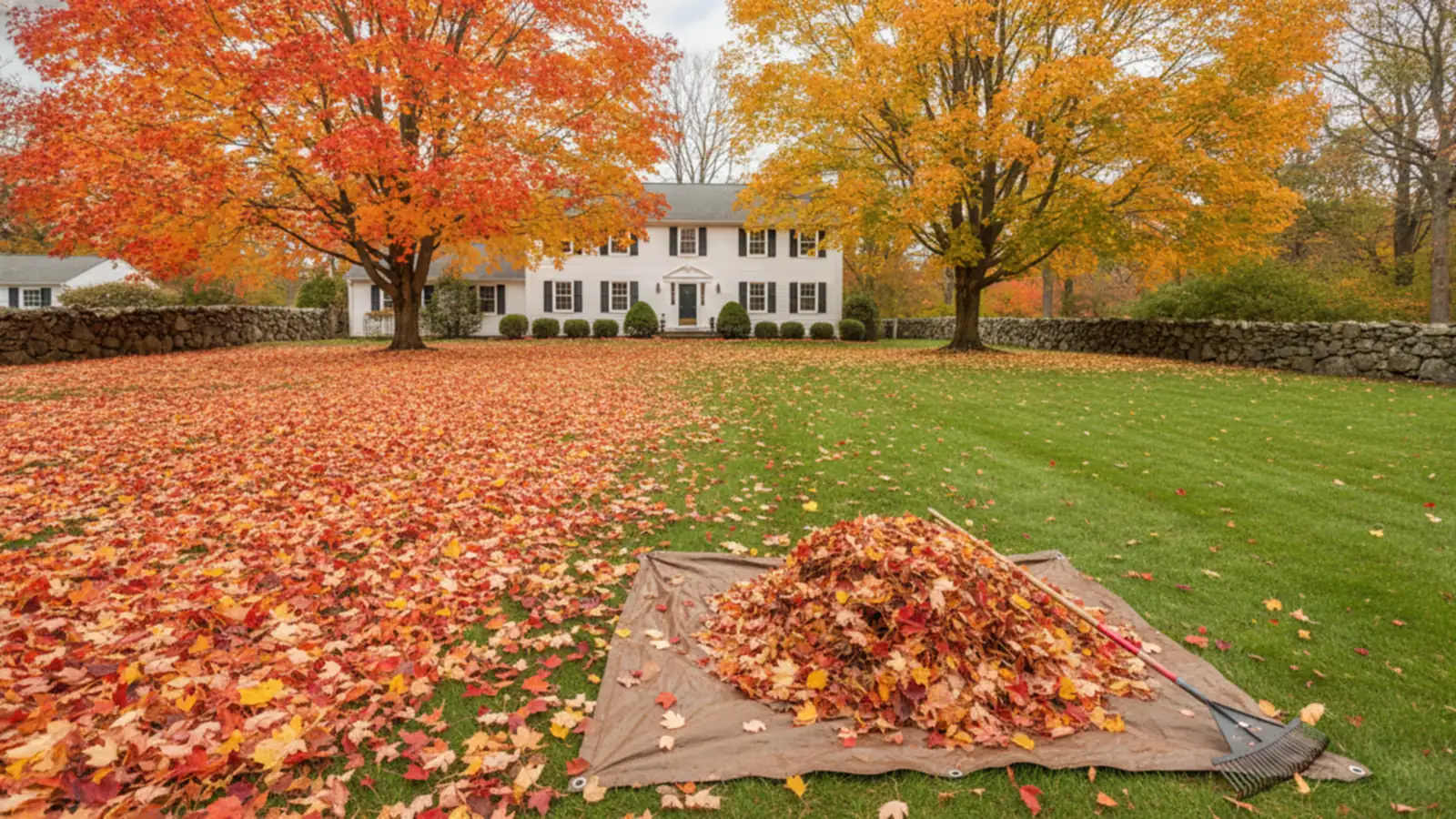
Hopkinton is one of the most wooded towns in MetroWest. Between Hopkinton State Park, the shoreline around Lake Whitehall and the mature oaks and maples on so many residential lots, fall cleanup in Hopkinton, MA is not a quick rake job. On a typical wooded property, the leaves keep coming for weeks, and what you do between mid October and early December decides how the lawn and beds look next spring.
This guide covers when to schedule fall cleanup in Hopkinton, what a complete cleanup includes, how the town handles leaves and brush, and the winter rules worth knowing before the first snow.
When the leaves really come down in Hopkinton
Maples usually color and drop first, often peaking in mid to late October. Oaks are the slow ones. Many hold their leaves into November, and some drop a final layer after the first hard freeze or a windy storm. On lots with both, there are effectively two leaf seasons stacked back to back.
That is why a single cleanup on November 1 often leaves you with a fresh blanket of oak leaves two weeks later. For heavily wooded Hopkinton properties, the most reliable plan is two visits: one in late October to clear the first wave and keep the lawn breathing, and a final cleanup in mid to late November once the oaks are done. Lightly wooded lots in newer neighborhoods can often be finished in one visit timed for early to mid November.
Do not let a thick, wet layer sit for long. Leaves matted down by rain block light and air, and grass underneath can be dead or diseased by spring.
What a complete fall cleanup includes
Leaf removal from the lawn is the obvious part, but a thorough fall cleanup also clears leaves out of shrub beds, from along foundations, fences and stone walls, out of window wells and off walkways and steps where wet leaves become slippery.
Beds get attention too. Perennials like hostas and daylilies are cut back once they collapse after frost, while sturdy plants like ornamental grasses, sedum and coneflowers can be left standing for winter interest and for birds. Annuals come out, and the last weeds are pulled before they drop seed.
The lawn gets a final mow at a slightly lower height, around 2.5 to 3 inches, so it does not mat under snow. Fallen sticks and small branches are gathered, and any branches hanging low over the driveway get flagged so they do not catch a plow or a snow-loaded limb in January.
Wooded lots, slopes and natural areas
Many Hopkinton homes back onto woods, wetlands or conservation land. There is no need to rake the woods. A natural leaf layer at the edge of the forest is healthy, and it is where pollinators and other wildlife spend the winter. The goal is to clean the lawn, beds and hard surfaces, then set a clean boundary where maintained yard meets woodland.
Do not blow or dump leaves into wetlands, streams or the edges of ponds. Conservation rules in Massachusetts protect wetland resource areas and their buffer zones, and piles of yard waste there can cause problems with the town's Conservation Commission. If you are unsure where your buffer zone is, check with the town before dumping anything near water.
Steeper lots and long driveways, common in Hopkinton, take longer to clean because leaves have to be moved a greater distance. That is worth knowing when comparing estimates.
Where Hopkinton yard waste goes
The Hopkinton Recycling Center sits on Route 135 near the Westborough town line and has handled leaf and brush disposal for residents. In past seasons the town has limited brush to pieces no longer than about 6 feet or thicker than about 6 inches, and it has added extra hours during the spring and fall cleanup seasons. Hours, sticker rules and accepted materials can change, so check the town's DPW page for the current schedule before you load up.
If you hire a cleanup service, the contractor should haul the leaves away as part of the job. Ask whether removal is included in the price, because some quotes cover only blowing leaves to the edge of the property.
Some homeowners keep a portion of their leaves. Shredded leaves make good mulch for beds and a great addition to a compost pile. Whole leaves on a lawn are the problem; shredded leaves in a bed are a resource.
Getting ready for winter: the parking ban and snow
Hopkinton's winter parking ban has run from November 15 through April 1, with no parking on any street between 1 AM and 6 AM. Vehicles that block snow removal can be towed at the owner's expense. The town also prohibits piling, pushing, plowing or shoveling snow onto public roads or sidewalks in a way that obstructs traffic or pedestrians, with fines per offense. Check the town's DPW page each fall for the current dates.
That November 15 date is a useful deadline for the yard as well. Aim to have the fall cleanup finished, hoses drained and put away, outdoor faucets shut off from inside, and driveway edges staked before then. Stakes show the plow where the pavement ends so it does not tear up lawn, beds or the edge of a stone wall.
If you plan to hire snow plowing, book it in the fall. Seasonal routes fill up, and storms in this part of MetroWest can arrive before Thanksgiving.
Thinking ahead to spring and summer water rules
Fall work pays off in spring. A lawn cleared of leaves and cut to the right height greens up faster in April and needs less repair. Fall is also the best window to overseed thin spots, because cool nights and warm soil help new grass establish before winter.
For homes on town water, Hopkinton has applied mandatory conservation every year from May 1 through September 30, allowing sprinkler watering two days per week by precinct, outside the 7 AM to 7 PM window, with stricter rules in drought. Homes on private wells are not covered by those rules, but water wisely all the same. A healthy, well-cleaned lawn going into winter needs less water to recover the following summer.
Procopio Landscaping & Design, a family-owned company based in Framingham, does fall cleanups, mowing and snow plowing in Hopkinton. If you want a second set of hands this season, estimates are free with no visit fee, in English, Portuguese or Spanish.
Frequently asked questions
- When is the best time for fall cleanup in Hopkinton, MA?
- For most wooded properties, two visits work best: late October for the first leaf drop and mid to late November once the oaks finish. Lightly wooded lots can usually be done in one visit in early to mid November.
- Can I leave leaves on my lawn over winter?
- A thin layer mulched into the grass with a mower is fine. A thick or matted layer is not; it blocks light, holds moisture and can lead to dead patches and snow mold in spring.
- Where can Hopkinton residents dispose of leaves and brush?
- The Hopkinton Recycling Center on Route 135 near the Westborough line has handled leaf and brush disposal for residents, with brush size limits and seasonal hours. Check the town's DPW page for current hours and rules.
- When does the Hopkinton winter parking ban start?
- It has run from November 15 through April 1, with no street parking between 1 AM and 6 AM. Cars blocking snow removal can be towed. Confirm the current dates with the town each fall.
- How much does fall cleanup cost in Hopkinton?
- It depends on lot size, how many trees drop on the property, slopes and whether leaves are hauled away. Wooded Hopkinton lots usually cost more than open suburban yards. A free on-site estimate is the way to get an accurate number.
Found this helpful? Make us a preferred source on Google.
Ready for an exact price?
Get a free, no-pressure in-home estimate. Real numbers for your home, not a phone guess.