
Black Mulch vs Brown Mulch: Which Is Best for Your Flower Beds?
· By Vantuir F. Procopio
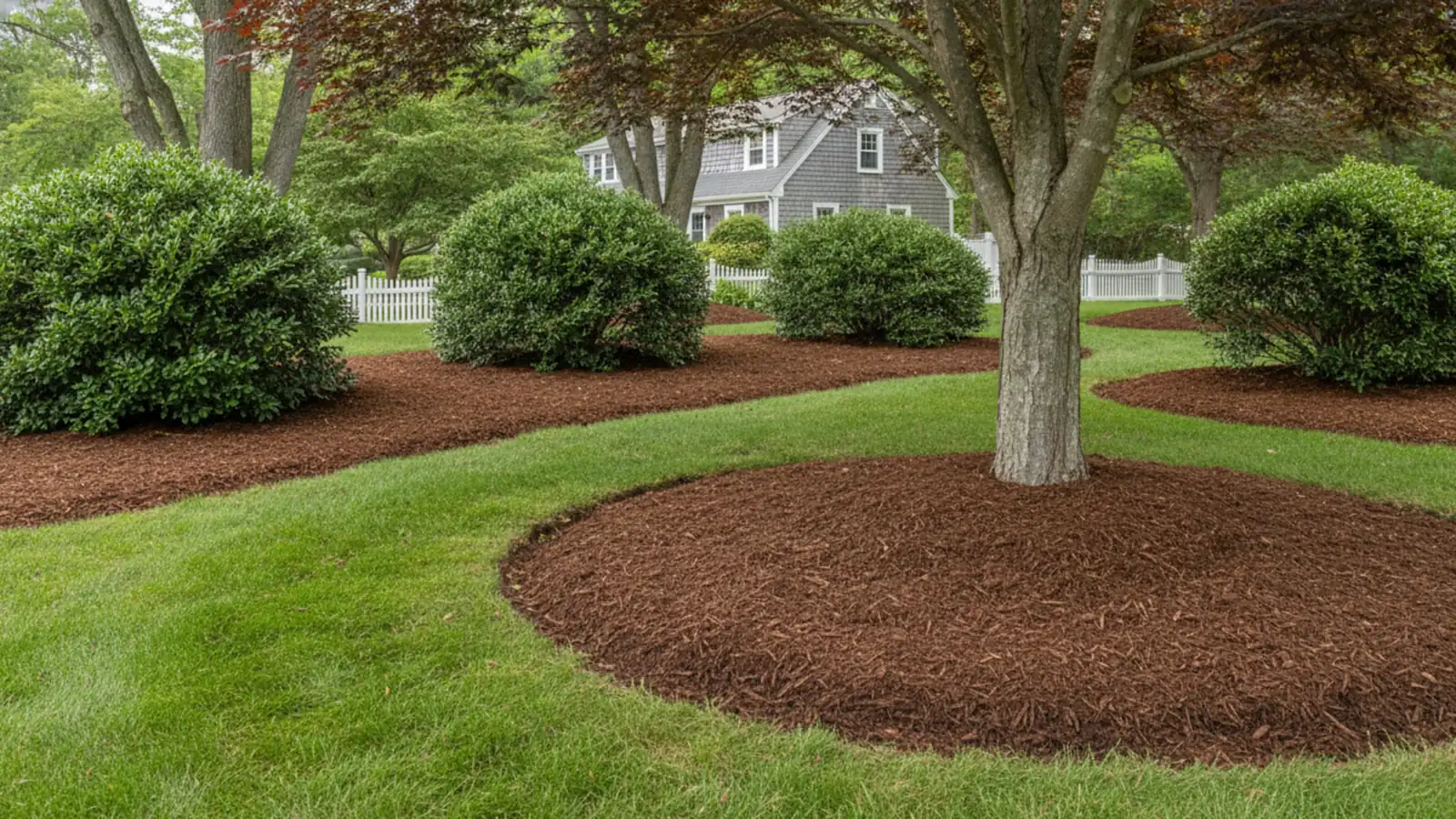
Black mulch vs brown mulch is mostly a question of looks, but not only. Color affects how hot the bed gets in summer, how fast the mulch fades, and how it frames your plants and your house. And behind the color there is a bigger choice: dyed mulch or natural bark.
This guide walks through the options you will actually find at Massachusetts landscape yards, including hemlock and pine bark, and helps you pick the best mulch for flower beds based on your plants, your house and how much upkeep you want.
Dyed vs natural mulch: what the color really means
Most black mulch and many of the bright brown or red mulches are dyed. They are usually made from ground wood, then colored with a dye. Black mulch is typically colored with a carbon-based pigment and red mulch with iron oxide, the same kind of pigment used in many paints and concrete stains. Extension services generally describe these colorants as low concern for plants and people.
The bigger question is the wood underneath. Some dyed mulch is made from recycled wood, like old pallets or construction scraps. Reputable suppliers screen their material, but quality varies. Buying from an established local yard is the easiest way to avoid low-grade product.
Natural mulch, like shredded hemlock or pine bark, is not colored at all. Its color comes from the bark itself. It looks rich when fresh and fades to a lighter, grayish brown as the season goes on.
Black mulch: pros and cons
Black mulch gives a bold, modern look. It makes green foliage and bright flowers pop, and it pairs well with white, gray and light-colored houses, a common look on newer homes in Hopkinton and Medway.
Because it is dyed, black mulch usually holds its color longer than natural bark, often through most of the season. That is a big reason people choose it.
The downsides: dark mulch absorbs more heat in direct sun. In a hot July bed facing south, that extra warmth can stress shallow-rooted annuals and some perennials. Black mulch can also look stark next to traditional red brick or natural stone walls, and when it does fade it can turn a dull charcoal.
Brown mulch: pros and cons
Brown mulch looks natural and warm. It blends with almost every house style, from historic colonials in Sherborn to capes and ranches in Framingham and Ashland, and it suits traditional New England landscapes with stone walls, mature oaks and maples.
Brown comes in two forms: dyed brown and natural brown bark. Dyed brown keeps a consistent color longer. Natural brown, like hemlock, has more variation in tone and slowly lightens through the summer.
The main drawback is that brown does not create as much contrast as black. Dark foliage plants, like purple-leaf shrubs, can blend into a dark brown bed instead of standing out.
Hemlock vs pine bark mulch
Hemlock bark mulch is a New England favorite. It has a rich reddish brown color when fresh, a fine shredded texture that knits together on slopes, and a clean, natural look. It breaks down over a season or two, which adds organic matter to the soil. Expect to top it up every year.
Pine bark mulch comes in shredded form and in nuggets. Pine bark nuggets last longer than shredded mulch because the larger pieces break down slowly, but they are lightweight and can float or wash out in heavy rain or on slopes. Shredded pine bark stays put better.
You may hear that pine bark makes soil too acidic. In practice, research summarized by extension programs shows mulch has only a small effect on soil pH. Acid-loving plants like rhododendrons, azaleas and blueberries do well with pine bark, but it will not hurt your other plants either.
Best mulch for flower beds
For perennial and annual flower beds, a finer shredded mulch usually works best. Hemlock or double-ground bark settles in around stems, breaks down to feed the soil, and is easy to work around when you divide or add plants. Big nuggets get in the way in a bed you change every year.
For shrub beds and foundation plantings that stay the same year after year, dyed mulch or pine bark nuggets are fine choices if you like the look and want color that lasts.
Whatever you choose, how you apply it matters more than the color. General extension guidance is to keep total depth around 2 to 3 inches, keep mulch a few inches away from stems and trunks, and avoid piling it into volcanoes around trees.
How to choose for your house
Start with the house. Light siding and gray stone usually look sharp with black. Red brick, natural wood and warm earth tones usually look better with brown or hemlock.
Then think about upkeep. If you want color that lasts most of the season, dyed mulch is the practical pick. If you prefer a natural look and are fine with a yearly refresh, hemlock or natural bark is hard to beat.
Last, be consistent. Mixing colors in different beds around the same house tends to look patchy. Pick one and use it everywhere. If you are unsure, Procopio Landscaping & Design can bring samples to your free estimate, with no visit fee, so you can see the colors against your own house and plants.
Frequently asked questions
- Is black mulch bad for plants?
- Not usually. The carbon-based dyes used in black mulch are generally considered low concern. The real issues are heat, since dark mulch warms up more in full sun, and the quality of the wood underneath. Buy from a reputable supplier and keep the depth around 2 to 3 inches.
- Which lasts longer, black or brown mulch?
- Dyed mulch, black or brown, usually holds its color longer than natural bark, often for most of the season. Natural brown mulch like hemlock fades to a lighter gray-brown over the summer. All organic mulch breaks down, so most beds still need a fresh layer every year.
- Is hemlock mulch better than pine bark?
- Neither is better for every yard. Hemlock has a rich reddish brown color and fine texture that works well in flower beds and stays put on slopes. Pine bark nuggets last longer but can float away in heavy rain. Shredded pine bark is a good middle ground.
- What is the best mulch for flower beds in Massachusetts?
- For most flower beds, a fine shredded natural mulch like hemlock or double-ground bark is a strong choice. It settles around stems, breaks down to improve the soil and is easy to work around when you plant. Apply 2 to 3 inches and keep it off plant stems.
- Does mulch attract termites or carpenter ants?
- Mulch does not attract termites on its own, but any moist organic layer can provide shelter for insects. A simple precaution is to keep mulch a few inches away from the foundation and siding, and to avoid piling it deep against the house.
Related services
Serving
Found this helpful? Make us a preferred source on Google.
Ready for an exact price?
Get a free, no-pressure in-home estimate. Real numbers for your home, not a phone guess.